
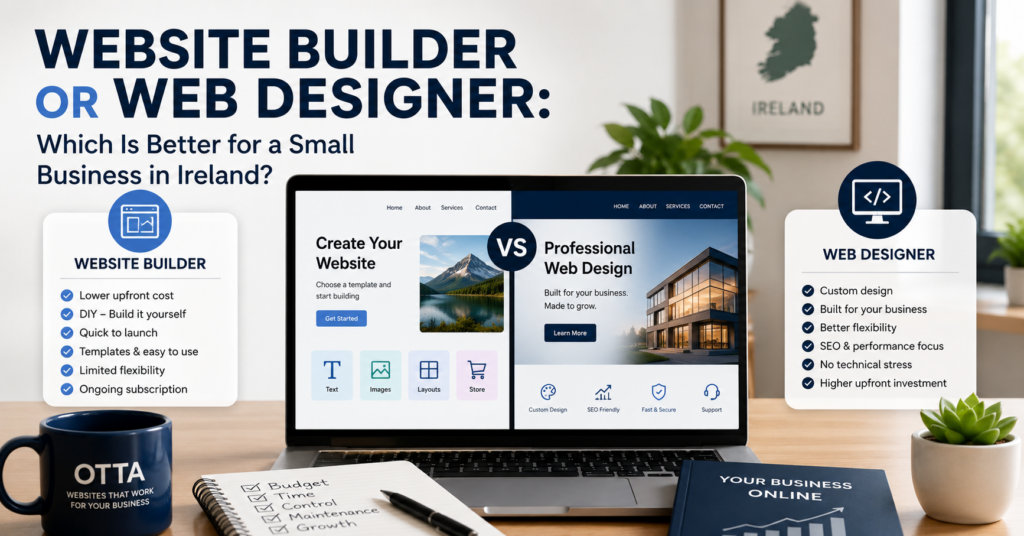
If you are starting or improving a small business website in Ireland, you have two decisions to make: which platform to use and whether to build the website yourself or hire someone to do it.
Choosing a website builder or web designer in Ireland depends on your budget, available time, technical confidence and what the website needs to do.
Hosted platforms such as Wix and Squarespace let you build a website using templates and visual editors. You can also build a self-hosted WordPress website yourself, although you will have more technical setup and maintenance to manage.
A professional can build on either type of platform. Hiring someone means paying for their work and experience, as well as any platform or hosting costs.
What Is a Website Builder?
A hosted website builder is a service that combines website editing tools with hosting. You create pages using templates, visual controls and the features available within the platform.
Examples include:
- Wix.
- Squarespace.
- Shopify, which focuses on ecommerce.
These services handle much of the underlying platform maintenance. You still need to plan the pages, write the content, choose images and configure the features your business needs.
For a straightforward website, doing this yourself can be a practical starting point.
What Does a Web Designer Do?
A web designer or developer helps turn your business requirements into a working website. The work included depends on the provider and the agreed project scope.
A project may include:
- Planning the website structure and navigation.
- Creating or adapting the design.
- Building pages and checking mobile layouts.
- Configuring contact or enquiry forms.
- Setting up agreed integrations.
- Basic SEO configuration.
- Performance checks.
- Arranging backups and security where applicable.
- Configuring analytics and search tools.
- Training and support after launch.
Do not assume every quote includes all of these services. Content writing, paid software, ongoing maintenance and future changes may be separate.
Our guide to what should be included in a small business website price in Ireland explains what to check before accepting a quote.
Website Builder or Web Designer: What Is the Main Difference?
The main difference is who takes responsibility for planning and completing the work.
With a DIY website, you make the decisions and carry out the build. With a professional, you agree a scope and pay someone to handle the specified work.
You will usually still need to provide information about the business, review drafts and approve the finished pages. Hiring a designer reduces the work you do yourself; it does not remove your involvement entirely.
The platform and the person building the site are separate choices. A designer can work with a hosted builder, and a business owner can build with WordPress.
Cost: Building the Website Yourself
A DIY website can reduce the initial cash outlay because you are doing the work rather than paying a project fee.
You will still need to budget for the platform or hosting and any additional services. Depending on your requirements, costs may include:
- Domain registration and renewal.
- A monthly or annual platform subscription.
- Hosting for a self-hosted website.
- Paid themes, plugins, apps or extensions.
- Business email.
- Booking, ecommerce or marketing services.
Check renewal prices and what is included in the plan you are considering. Compare the total ongoing cost of the features you need.
Your time also matters. If the build takes several weekends, the subscription price will not reflect the full effort involved.
Cost: Hiring a Professional
A professionally built website usually involves an initial project fee, alongside ongoing platform, hosting or support costs.
The price depends on the scope: the number of pages, content work, design requirements, integrations and the amount of testing and support included.
Compare quotes against the same requirements. A lower quote may cover a smaller amount of work, while a higher quote may include services you do not need.
If you are deciding how much to allocate, our guide to a small business website budget in Ireland can help you plan the expenditure.
Time: The Cost People Often Forget
A visual editor can make adding a page straightforward. Creating a complete business website still requires decisions about:
- Page structure and navigation.
- What to say about your services.
- Images and branding.
- Contact forms and enquiry routes.
- Mobile layouts.
- Search optimisation.
- Privacy information and any consent tools needed.
If you enjoy this work and have time to learn, building the website yourself may suit you.
If you are already busy running the business, consider whether the hours spent on the website would be better used elsewhere. Professional help can be worthwhile even for a small site.
Design Flexibility
Templates can provide a useful starting point for both DIY and professionally built websites. A business website does not need a completely bespoke design to work well.
What matters is whether the layout makes your services clear, works on mobile devices and helps visitors take the next step.
A professional can help adapt the design around those needs. The available flexibility still depends on the platform, the agreed scope and the tools used.
If you need a particular feature or layout, ask how it will be implemented before committing to the project.
How Easy Is It to Make Changes?
Before choosing a platform or provider, consider the updates you expect to make yourself.
Common changes include:
- Editing text.
- Replacing images.
- Updating opening hours.
- Changing service information.
- Adding a news post or article.
Hosted builders and WordPress can both support everyday editing. How straightforward it feels depends on how the website has been configured and your familiarity with the editor.
If someone builds the website for you, ask what access you will receive, whether a handover is included and which changes you can make without assistance.
Maintenance
Maintenance responsibilities depend more on the platform and support agreement than on who built the website.
A hosted builder handles much of the underlying technical maintenance. You still need to manage your account, content, renewals and connected services.
For a self-hosted WordPress website, somebody needs to look after:
- WordPress, theme and plugin updates.
- Backups and recovery.
- Security monitoring.
- Compatibility checks after changes.
- Hosting and software renewals.
- Testing important forms and features.
You can handle this yourself or arrange a maintenance service. Having a website professionally built does not automatically include ongoing care.
Our guide to small business website maintenance explains the work involved.
Ownership and Portability
A hosted website is tied to the platform that runs it. If you move elsewhere, some content may be transferable, but you may need to rebuild the design and functionality.
A self-hosted WordPress website can generally be moved between compatible hosting providers, although a migration still needs planning and testing.
Whichever route you choose, establish who controls:
- The domain registration.
- The website and hosting accounts.
- The content and image licences.
- Paid software licences.
- Analytics and search accounts.
If you hire a provider, ask what happens when the project ends or you decide to change suppliers.
SEO: Can a Website Builder Rank in Google?
A website built with a hosted builder can appear in search results. Using WordPress or hiring a designer does not guarantee better rankings.
Useful content, clear pages and a website that search engines can access all matter. The platform should support the settings and features you need.
When planning the website, consider:
- Clear page titles and headings.
- Content that answers customers’ questions.
- Internal links between relevant pages.
- Mobile usability and performance.
- Redirects if you replace an existing website.
Ask what an offer of “SEO included” actually covers. Initial technical setup and ongoing work to improve search visibility are different services.
When Does a DIY Website Builder Make Sense?
Building the website yourself can be a sensible choice when:
- Your initial budget is limited.
- The requirements are straightforward.
- You have time to plan, build and check the pages.
- You are comfortable learning the editor.
- You can work within the platform’s available features.
For a new business that needs a basic online presence, this may be enough. Keep the scope manageable and focus on accurate service information and a clear way to contact you.
When Does Hiring a Web Designer Make Sense?
Professional help becomes more useful when:
- Your time is better spent running the business.
- You need help organising the content and structure.
- The website has specific functional requirements.
- You want someone to manage the build and testing.
- You are replacing an existing site and need a planned migration.
- Your DIY project has stalled or become difficult to maintain.
Agree clear deliverables, responsibilities and costs before work starts. That matters more than a long list of features.
What About Building WordPress Yourself?
You can build a self-hosted WordPress website yourself. Themes and visual editing tools can help, but you also need to choose hosting and arrange updates, backups and security.
For someone who is technically comfortable and willing to learn, this can be a practical option.
If you want WordPress but would rather have someone else handle the setup, a professional build is another route. You can then decide whether to manage ongoing maintenance yourself or pay for support.
Website Builder vs WordPress
If you are comparing platforms, our Wix vs WordPress guide for small businesses in Ireland looks at the differences in costs, flexibility and ongoing responsibilities. We also have a separate comparison of WordPress vs Squarespace for a small business website in Ireland.
Self-hosted WordPress offers more choice over hosting and how the site is extended. Hosted platforms bring more of the technical management into one service.
Choose based on the features you need and the responsibilities you are prepared to take on.
Do Not Choose Based on Price Alone
The cheapest option is not always the best value, and a higher price does not automatically produce a better website.
Choose a solution that meets your requirements at a cost you can sustain. Include your time, ongoing subscriptions and maintenance in that comparison.
If a basic builder does everything you need, there may be little reason to commission a complex website. If you are spending weeks struggling with the build, paying for help may be a better use of your budget.
Website Builder or Web Designer in Ireland: Which Should You Choose?
Start by balancing three things:
- Money: what can you spend on the build and each year afterwards?
- Time: how much can you realistically devote to creating and updating the website?
- Technical responsibility: what are you comfortable managing yourself?
Then write down the essential pages and features. That gives you a basis for choosing a platform or asking a designer for a quote.
A small site can be built professionally, and an established business can use a hosted builder successfully. The right choice depends on the work required and who is best placed to do it.
Planning a Small Business Website?
OTTA builds WordPress websites for small businesses in Ireland, with a clear project scope based on what the business needs.
Most projects are handled by phone and email. For businesses near Dundalk, an in-person meeting is also possible: web designer in Dundalk.
You can review the available options on the OTTA services page.
If you have a project in mind, send a short overview of your business and requirements through the website project enquiry form.
Find our advice useful?
Add OTTA as a preferred source on Google.